
August 7, 2026
Healthcare Staffing: The Complete Guide for Modern Medical Practices
.png)
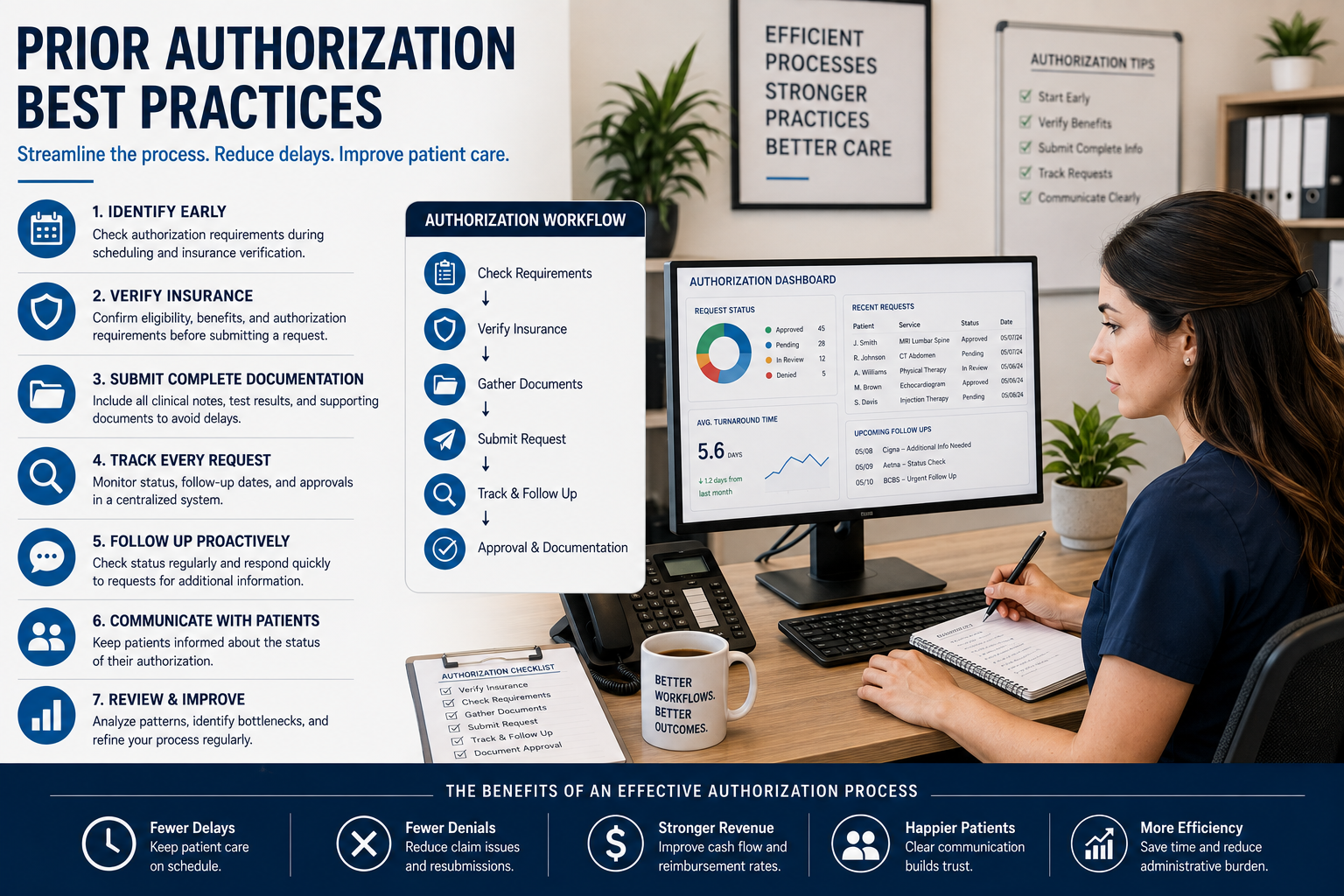
Prior authorizations are one of the most time-consuming administrative responsibilities in modern healthcare.
From gathering clinical documentation to communicating with insurance companies and tracking approval status, the process can quickly consume valuable staff time. When managed inefficiently, prior authorizations may delay patient care, increase administrative workload, and create unnecessary frustration for both staff and patients.
While every payer has different requirements, establishing a consistent workflow can significantly improve efficiency.
Here are the prior authorization best practices every healthcare practice should consider.
Healthcare practices can improve prior authorization workflows by identifying authorization requirements early, submitting complete documentation, tracking requests consistently, communicating proactively with patients, and creating standardized internal processes.
The earlier authorization needs are identified, the more time your team has to complete the process before the patient’s appointment or procedure.
Review authorization requirements during:
Waiting until the day of service often creates unnecessary delays.
Before beginning an authorization request, verify the patient’s insurance information.
Confirm:
Accurate information reduces duplicate work later.
Incomplete documentation is one of the most common reasons authorization requests are delayed.
Depending on the service, supporting documentation may include:
Submitting complete information the first time often helps prevent unnecessary follow-up.
Busy practices benefit from documented procedures.
Develop standardized workflows for:
Consistency improves efficiency across the entire team.
Once a request has been submitted, it shouldn’t disappear into a spreadsheet or inbox.
Track:
A centralized tracking system helps prevent requests from being overlooked.
Some authorization requests require additional documentation or clarification.
Rather than waiting indefinitely, establish regular follow-up intervals to check status and resolve outstanding requests promptly.
Consistent follow-up often shortens turnaround times.
Patients appreciate knowing where things stand.
If an authorization is pending, delayed, or requires additional information, communicate updates proactively.
Clear communication helps manage expectations and reduces inbound phone calls asking for status updates.
Over time, review where delays occur most frequently.
Questions to ask include:
Understanding trends allows practices to improve workflows over time.
Prior authorizations often involve multiple team members.
Front office staff, providers, insurance verification specialists, billing teams, and schedulers should all have access to accurate authorization information.
Strong communication helps prevent scheduling issues and claim delays.
Healthcare regulations and payer requirements evolve regularly.
Review your prior authorization workflow periodically to identify opportunities for improvement, simplify repetitive tasks, and eliminate unnecessary administrative work.
Small process improvements can produce meaningful long-term efficiency gains.
Some of the most common administrative errors include:
Many of these issues can be reduced through better organization and standardized procedures.
Prior authorizations help determine whether certain healthcare services require approval from the patient’s insurance plan before treatment is provided.
They can, particularly when requests are submitted late or require additional documentation. Starting the process early often helps minimize delays.
Creating standardized workflows, tracking requests carefully, communicating across departments, and following up consistently can improve efficiency.
Yes. Administrative professionals often assist with gathering documentation, submitting requests, tracking approvals, communicating with insurance companies, and updating providers throughout the process.
Prior authorizations are an unavoidable part of many healthcare workflows, but they don’t have to become a constant source of frustration.
Practices that build organized systems, submit complete documentation, track requests consistently, and communicate proactively are often better equipped to reduce delays and keep patient care moving forward.
Improving your authorization process not only supports operational efficiency but also creates a better experience for both patients and staff.
At Winning Assistants, we provide experienced healthcare administrative professionals who support prior authorizations, insurance verification, patient communication, documentation, and other administrative workflows that help practices operate more efficiently.
If your team is spending too much time managing authorizations, book a free consultation to learn how we can help strengthen your administrative operations.