August 7, 2026
Healthcare Staffing: The Complete Guide for Modern Medical Practices
.png)
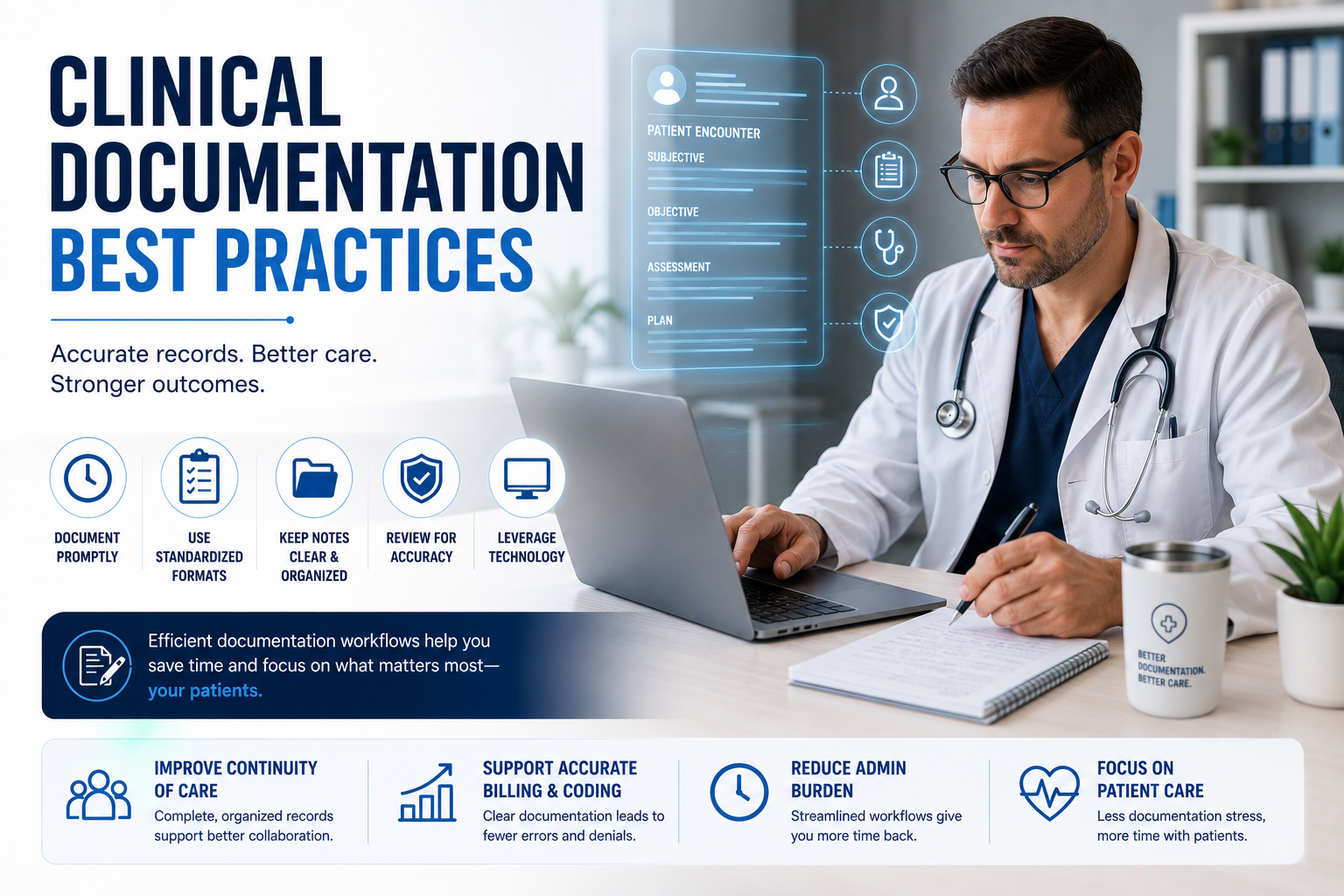
Clinical documentation is one of the most important parts of modern healthcare.
Every patient encounter generates information that helps guide future treatment, supports communication between providers, and contributes to the overall operation of a healthcare practice.
Strong documentation is more than simply recording what happened during a visit.
It creates a clear, organized record that supports patient care while helping practices maintain efficient administrative workflows.
Whether you’re a solo provider or part of a growing medical group, following consistent documentation practices can improve both clinical and operational performance.
Healthcare providers can improve clinical documentation by documenting encounters promptly, maintaining consistency, using standardized formats, reviewing notes for accuracy, and building workflows that support complete and organized medical records.
Every patient interaction becomes part of a permanent medical record.
Complete documentation supports:
Well-documented records also make it easier for providers to quickly understand a patient’s history during future visits.
The sooner documentation is completed, the more accurate it tends to be.
Waiting until the end of the day increases the likelihood that small but important details may be forgotten.
Many providers build documentation into their workflow immediately after each patient encounter whenever practical.
Consistency helps both providers and administrative teams.
Standardized note structures make records easier to review while reducing variation between visits.
Many organizations use structured documentation formats such as SOAP notes or other specialty-specific templates.
Documentation should be easy to understand.
Avoid unnecessary complexity and organize information logically so future providers can quickly locate relevant details.
Clear documentation benefits everyone involved in patient care.
Even experienced providers occasionally make documentation errors.
Before completing a note, review it for:
A brief review often prevents future administrative issues.
Documentation backlogs can create unnecessary stress throughout a practice.
Incomplete notes may delay coding, billing, administrative follow-up, and future patient care.
Developing efficient documentation workflows helps prevent records from accumulating.
Modern healthcare practices often use technology to improve documentation efficiency.
Examples include:
Technology works best when combined with careful human review.
Many growing healthcare practices use medical scribes or virtual healthcare assistants to assist with documentation workflows.
Depending on the practice, support may include:
This allows providers to spend more time focused on patients while maintaining organized records.
Many healthcare practices experience:
Improving workflows can often reduce these challenges.
Clinical documentation creates a complete record of patient care, supports communication between providers, improves continuity of care, and contributes to efficient healthcare operations.
Building standardized workflows, documenting promptly, using templates, leveraging technology, and utilizing documentation support can all improve efficiency.
Yes.
Many virtual healthcare assistants support medical scribing, documentation preparation, medical transcription, chart organization, and EHR administrative tasks, allowing providers to focus more on patient care.
AI can assist with certain documentation tasks, but human review remains essential to ensure records are accurate, complete, and appropriate for patient care.
Excellent clinical documentation benefits everyone involved in the healthcare process.
It improves communication, supports better patient care, strengthens administrative workflows, and creates more organized medical records.
Practices that invest in efficient documentation systems often reduce provider administrative burden while improving the overall quality and consistency of their records.
At Winning Assistants, we help healthcare practices improve documentation efficiency by providing experienced virtual healthcare assistants who support medical scribing, SOAP note preparation, medical transcription, EHR documentation, patient communication, scheduling, insurance verification, and many other non-clinical healthcare workflows.
If you’re looking to reduce documentation burden and create more time for patient care, book a free consultation to learn how a virtual healthcare assistant can support your practice.