
August 7, 2026
Healthcare Staffing: The Complete Guide for Modern Medical Practices
.png)

Medical billing is one of the most important operational functions in any healthcare practice.
Even small mistakes in documentation, coding, insurance verification, or claims submission can create payment delays, increase administrative work, and negatively affect cash flow.
While every specialty has unique billing requirements, the most successful practices tend to follow the same core principles: accuracy, consistency, organization, and proactive follow-up.
Whether you’re a solo provider or managing multiple locations, these best practices can help create a more efficient billing process.
Healthcare practices can strengthen their medical billing process by verifying insurance before appointments, documenting accurately, submitting claims promptly, monitoring denials, following up on outstanding claims, and regularly reviewing billing workflows for opportunities to improve efficiency.
Many billing problems begin before the patient even arrives.
Insurance eligibility, coverage, deductibles, copays, and authorization requirements should be verified before appointments whenever possible.
Completing this step early helps reduce claim issues later in the revenue cycle.
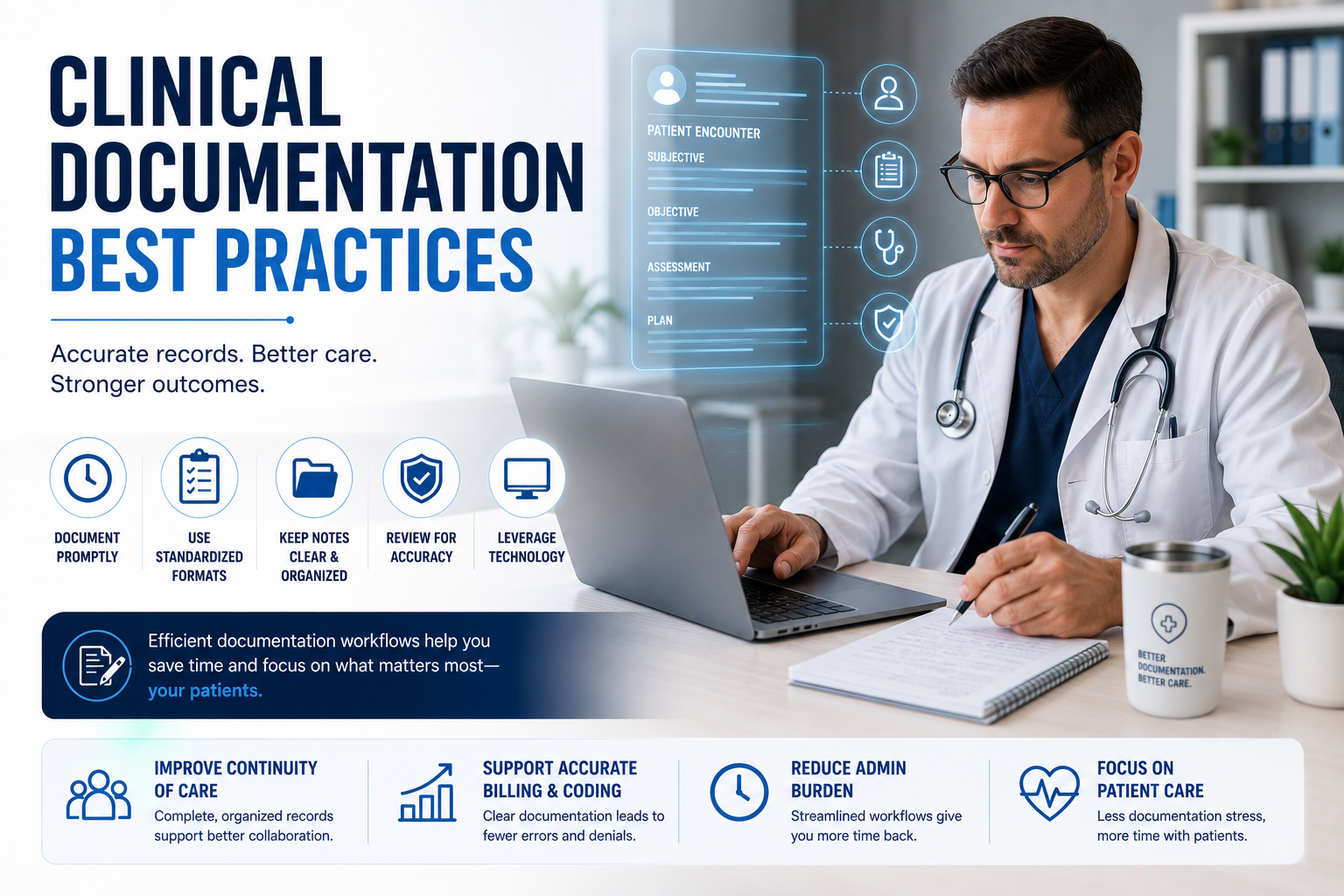
Accurate billing begins with accurate documentation.
Incomplete or unclear clinical documentation may lead to coding questions, claim delays, or requests for additional information.
Providers and administrative teams should work together to ensure documentation is completed consistently and promptly.
Delays in claims submission can slow cash flow and create unnecessary administrative work.
Establishing consistent billing timelines helps practices stay organized and identify issues earlier in the process.
Many successful practices build standardized daily or weekly claim submission workflows.
Every denied claim represents an opportunity to identify a process that may need improvement.
Rather than simply correcting individual claims, review denial patterns over time.
Common reasons include:
Identifying trends often prevents future denials.
Submitting a claim is only one step in the billing process.
Practices should regularly review outstanding claims and follow up when payments remain delayed.
Consistent follow-up helps maintain healthy cash flow and reduces aging accounts receivable.
Incorrect demographic information can delay claim processing before insurance is even involved.
Regularly verify:
Small updates can prevent significant billing delays.
Successful billing departments rely on documented procedures rather than individual habits.
Create standard workflows for:
Consistency improves efficiency and simplifies training.
You can’t improve what you don’t measure.
Consider reviewing metrics such as:
These metrics help identify operational opportunities before they become larger problems.
Billing depends on collaboration.
Providers, coders, billers, and administrative staff should communicate regularly when documentation questions, coding issues, or payer requirements arise.
Strong communication often prevents small issues from becoming larger billing problems.
Healthcare billing is constantly evolving.
Insurance requirements change.
Payer policies change.
Documentation expectations evolve.
Practices that regularly evaluate their workflows are often better positioned to maintain efficient billing operations over time.
Many billing issues result from preventable administrative errors.
Some of the most common include:
Addressing these issues proactively can improve both operational efficiency and revenue cycle performance.
Every step matters, but accurate documentation, insurance verification, and timely claims submission provide a strong foundation for an effective billing process.
Claim denials can occur for many reasons, including eligibility issues, missing information, authorization requirements, documentation concerns, coding discrepancies, and payer-specific rules.
Many practices benefit from reviewing billing processes regularly, especially after payer updates, staffing changes, or noticeable increases in claim denials.
Administrative professionals can often assist with insurance verification, documentation preparation, claims follow-up, payment posting, and other revenue cycle activities, allowing billing teams to focus on higher-priority work.
Medical billing is about much more than submitting claims.
It’s a continuous process that depends on accurate documentation, organized workflows, effective communication, and consistent follow-up.
Practices that invest in strong billing processes are often better equipped to reduce administrative challenges, improve cash flow, and create a smoother experience for both staff and patients.
Building efficient systems today can help support long-term operational success.
At Winning Assistants, we help healthcare practices expand their administrative capacity with experienced professionals who can support insurance verification, claims follow-up, payment posting, documentation, patient communication, and many other revenue cycle responsibilities.
If you’re looking to improve the efficiency of your billing workflows, book a free consultation to learn how our team can support your practice.