August 7, 2026
Healthcare Staffing: The Complete Guide for Modern Medical Practices
.png)
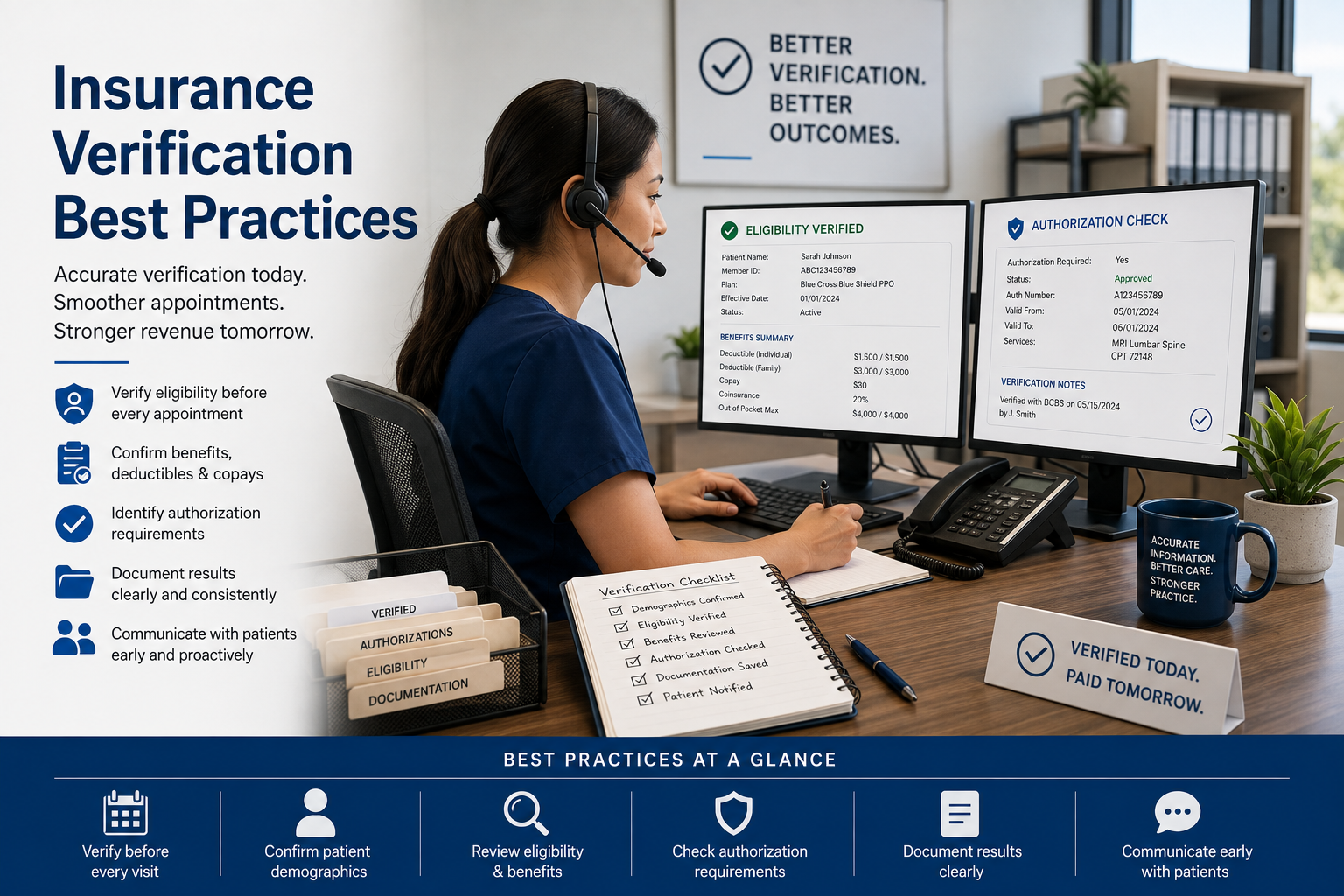
Insurance verification is one of the most important administrative processes in a healthcare practice.
When completed accurately and consistently, it helps practices confirm patient coverage, identify authorization requirements, reduce billing issues, and create a smoother experience for both patients and staff.
When verification is skipped or rushed, small mistakes can lead to appointment delays, claim denials, payment issues, and additional administrative work.
The good news is that many of these problems can be prevented by building a consistent insurance verification process.
Here are the best practices every healthcare practice should know.
Healthcare practices can strengthen insurance verification by confirming eligibility before appointments, verifying patient demographics, identifying authorization requirements, documenting findings consistently, and creating standardized workflows that reduce errors and improve efficiency.
Insurance coverage can change frequently.
Even returning patients may have:
Verifying coverage before every appointment helps reduce unexpected issues on the day of service.
Insurance verification begins with accurate patient information.
Before checking eligibility, confirm:
Even minor demographic errors can delay verification or contribute to claim issues later in the billing process.
Verification is about more than confirming active insurance.
Practices should also determine:
The more information gathered upfront, the fewer surprises later.
Some services require prior authorization before treatment.
Waiting until the patient arrives may delay care and increase administrative workload.
During verification, determine:
This helps prevent scheduling disruptions and unnecessary claim denials.
Insurance verification should always be documented in a consistent format.
Include details such as:
Clear documentation helps the rest of the team work from the same information.
Every employee should follow the same verification process.
Create written procedures for:
Consistency improves accuracy and simplifies staff training.
Insurance questions are easier to resolve before the appointment.
If verification identifies an issue, contact the patient as soon as possible.
Examples include:
Early communication helps avoid delays at check-in.
Review your workflow regularly and identify recurring issues.
Common examples include:
Recognizing trends helps improve the process over time.
Insurance verification and medical billing work together.
Information collected during verification directly affects claim accuracy.
Strong communication between front office staff, insurance verification specialists, and billing teams helps reduce errors throughout the revenue cycle.
Insurance requirements evolve constantly.
Payer policies change.
Coverage rules change.
Technology changes.
Practices should periodically review their verification workflows to ensure they remain accurate, efficient, and aligned with current payer requirements.
Many verification issues are preventable.
Some of the most common include:
Improving these areas often leads to a smoother administrative process.
Insurance verification helps confirm patient coverage before services are provided, reducing billing issues, claim denials, appointment delays, and unexpected financial surprises.
Many healthcare practices verify insurance before every appointment because coverage and benefits can change at any time.
Insurance verification confirms a patient’s eligibility and benefits.
Prior authorization is a payer approval that may be required before certain services can be performed.
While it cannot prevent every denial, accurate insurance verification helps reduce many avoidable administrative errors that commonly contribute to denied claims.
Insurance verification is one of the first steps in a successful revenue cycle.
When completed consistently and accurately, it supports smoother scheduling, stronger billing processes, fewer claim issues, and a better experience for patients and staff alike.
Practices that invest in organized verification workflows often spend less time resolving preventable administrative problems later.
Strong verification creates a stronger foundation for every patient encounter.
At Winning Assistants, we provide experienced healthcare professionals who can support insurance verification, eligibility checks, prior authorization coordination, patient communication, and other administrative responsibilities that keep your practice running efficiently.
If you’re looking to strengthen your front office and revenue cycle operations, book a free consultation to learn how our team can support your practice.