August 7, 2026
Healthcare Staffing: The Complete Guide for Modern Medical Practices
.png)
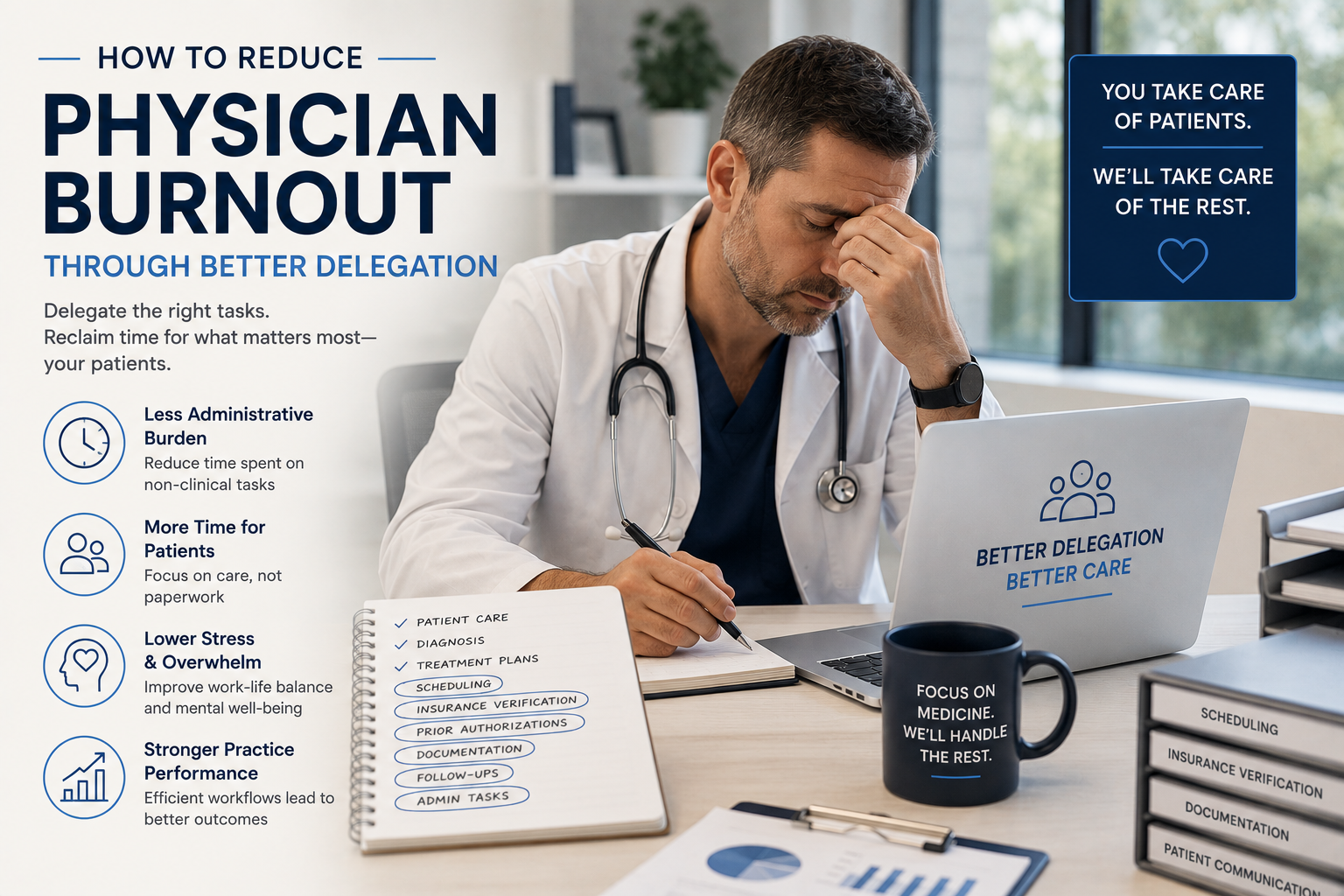
Physician burnout has become one of the most significant challenges facing healthcare today.
Long hours, growing administrative responsibilities, staffing shortages, documentation demands, and increasing patient expectations have created workloads that extend well beyond the exam room.
While no single solution eliminates burnout, many healthcare practices are finding that improving operational efficiency and delegating appropriate administrative work can help reduce unnecessary pressure on providers.
The goal isn’t simply to work less.
It’s to ensure physicians spend more of their day doing the work only they can do—caring for patients.
One way healthcare practices can help reduce physician burnout is by delegating appropriate non-clinical administrative responsibilities. Tasks such as scheduling, insurance verification, patient communication, documentation support, and administrative follow-up can often be handled by trained administrative staff, allowing physicians to devote more time to patient care.
Burnout is complex.
It can be influenced by workload, staffing challenges, administrative demands, documentation requirements, organizational culture, and many other factors.
Although every practice is different, one consistent source of frustration is the growing amount of non-clinical work physicians perform each day.
Many providers spend hours on responsibilities that don’t require their medical expertise.
A physician’s day often includes far more than patient appointments.
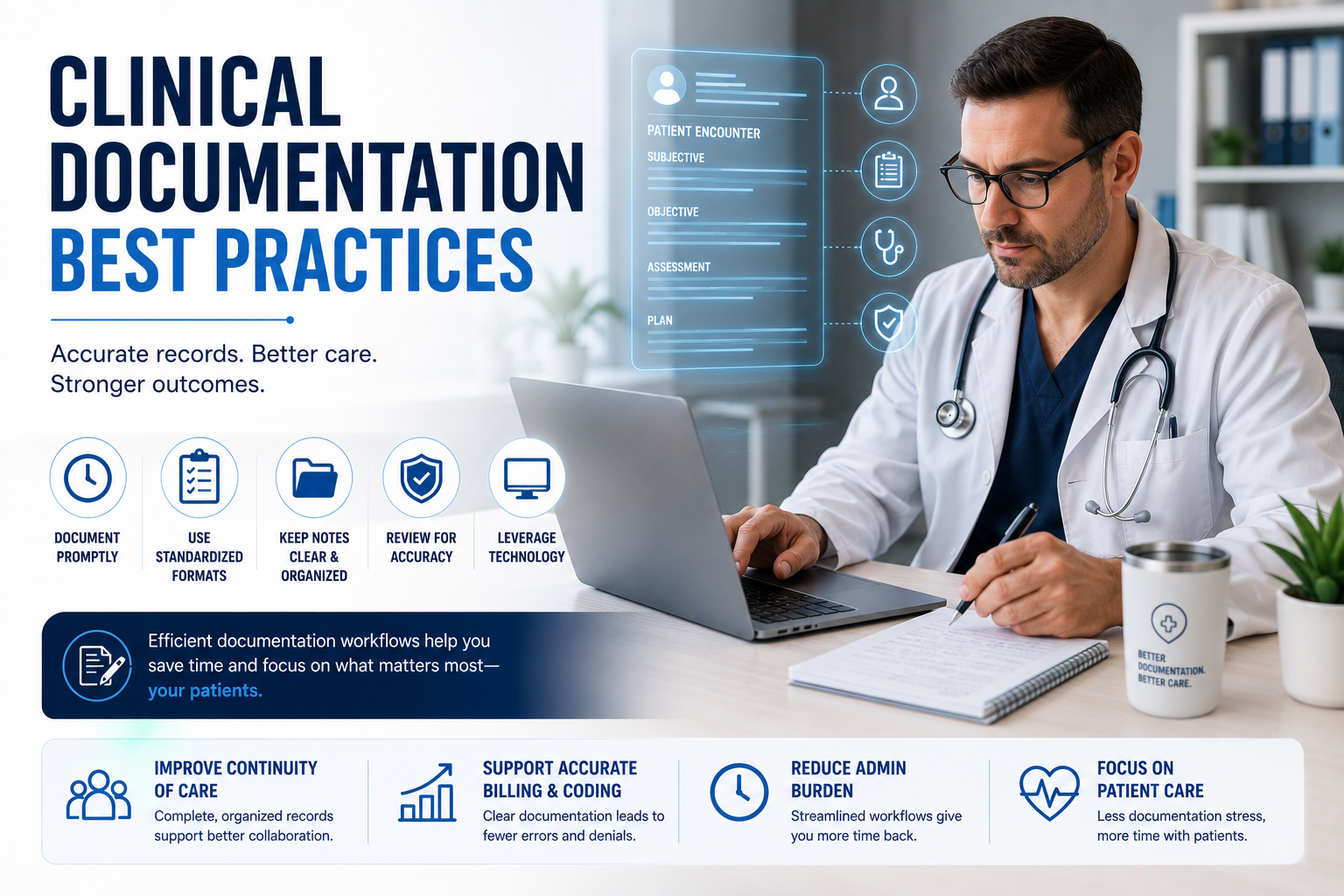
Administrative responsibilities may include:
Individually, these tasks may seem manageable.
Together, they can consume a significant portion of the workday.
Delegation is not about giving away responsibility.
It’s about ensuring every member of the team is working at the highest level of their role.
When appropriate administrative work is delegated, physicians often gain additional time for:
Better delegation allows physicians to focus on work that requires their expertise.
Every practice is different, but many administrative responsibilities may be appropriate to delegate, including:
Delegation should always be appropriate for the individual’s role, training, and organizational policies.
You may benefit from reviewing delegation strategies if:
These situations often indicate opportunities to improve workflow rather than simply asking the team to work harder.
Better delegation doesn’t only benefit physicians.
It can also support:
Successful delegation requires more than assigning work.
Practices should also create:
Well-designed systems allow delegation to happen smoothly and consistently.
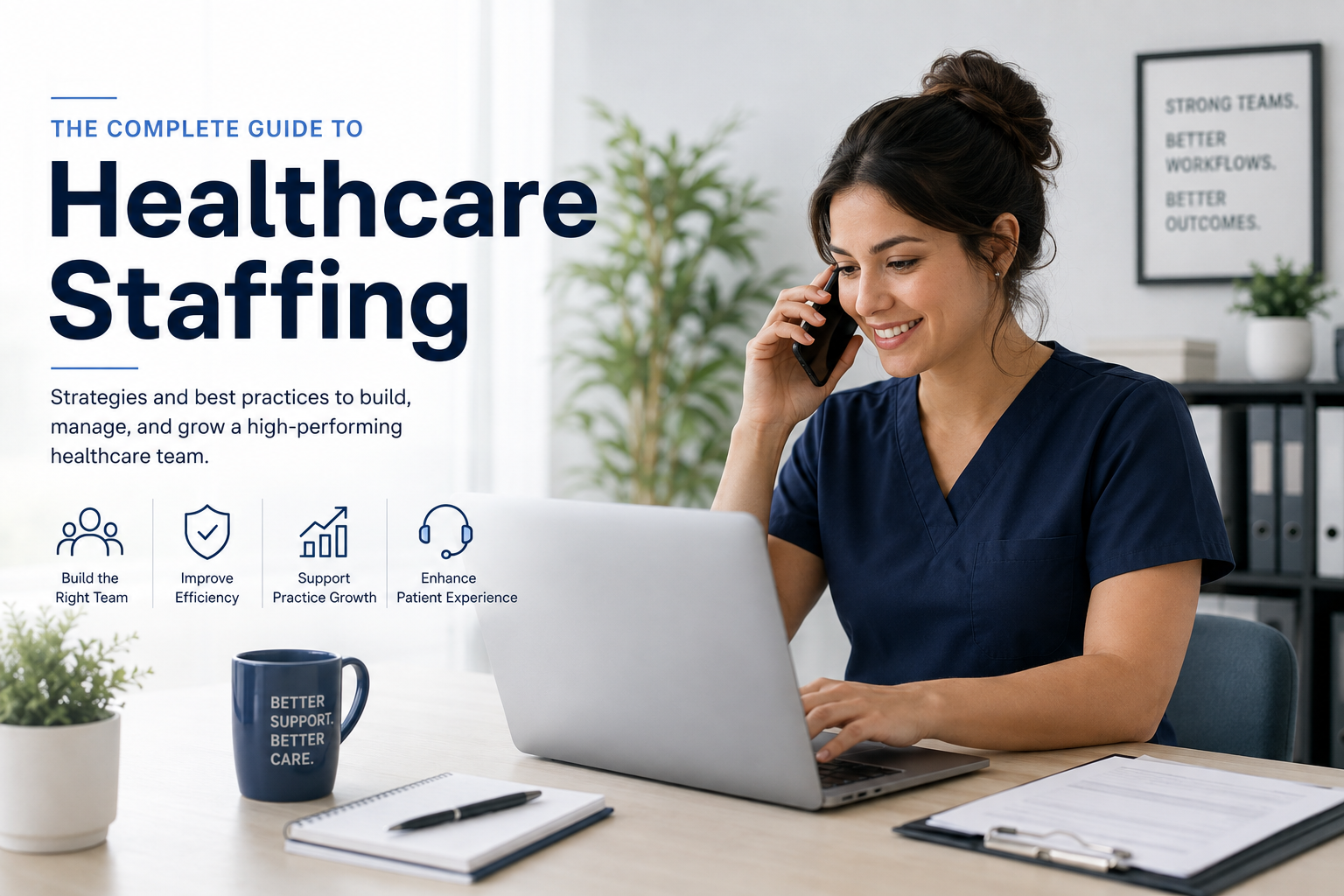
Many healthcare practices are exploring remote administrative support as part of their delegation strategy.
Experienced medical virtual assistants can often assist with responsibilities such as:
This allows providers and in-office staff to focus on higher-value responsibilities while maintaining consistent administrative support.
No.
Burnout is influenced by many factors. Delegation is one operational strategy that may help reduce administrative burden and improve workflow efficiency.
Clinical judgment, diagnosis, treatment decisions, prescribing, and responsibilities requiring a licensed healthcare provider should remain with qualified clinical professionals.
Many practices begin with appointment scheduling, insurance verification, patient communication, documentation support, and administrative follow-up.
Not at all.
Solo providers and smaller practices can often benefit from reviewing administrative workflows and identifying opportunities to delegate repetitive non-clinical work.
Physicians enter healthcare to care for patients—not to spend evenings catching up on administrative work.
While burnout has many contributing factors, improving delegation is one practical step practices can take to reduce unnecessary administrative burden and create more time for meaningful patient care.
By ensuring every team member focuses on the work they are best equipped to perform, healthcare organizations can build more efficient operations that support providers, staff, and patients alike.
If administrative work is consuming too much of your providers’ day, it may be time to rethink how responsibilities are distributed across your team.
At Winning Assistants, we help healthcare practices delegate time-consuming administrative work to experienced medical virtual assistants so providers can focus more of their time on patient care and practice growth.
Book a free consultation to learn how remote administrative support can help create a more efficient workflow for your healthcare practice.