August 7, 2026
Healthcare Staffing: The Complete Guide for Modern Medical Practices
Running a successful healthcare practice requires more than excellent clinical care.
Behind every patient visit is a series of administrative processes that keep the practice operating efficiently—from scheduling appointments and verifying insurance to documenting visits and following up on claims.
When these workflows become disorganized, even the best providers can experience unnecessary stress, delays, and administrative overload.
Optimizing your workflows isn’t about asking your team to work harder. It’s about creating systems that allow everyone to work smarter.
Healthcare practices can improve workflow efficiency by standardizing processes, reducing unnecessary administrative tasks, improving communication, leveraging technology, and ensuring every team member focuses on the responsibilities where they provide the most value.
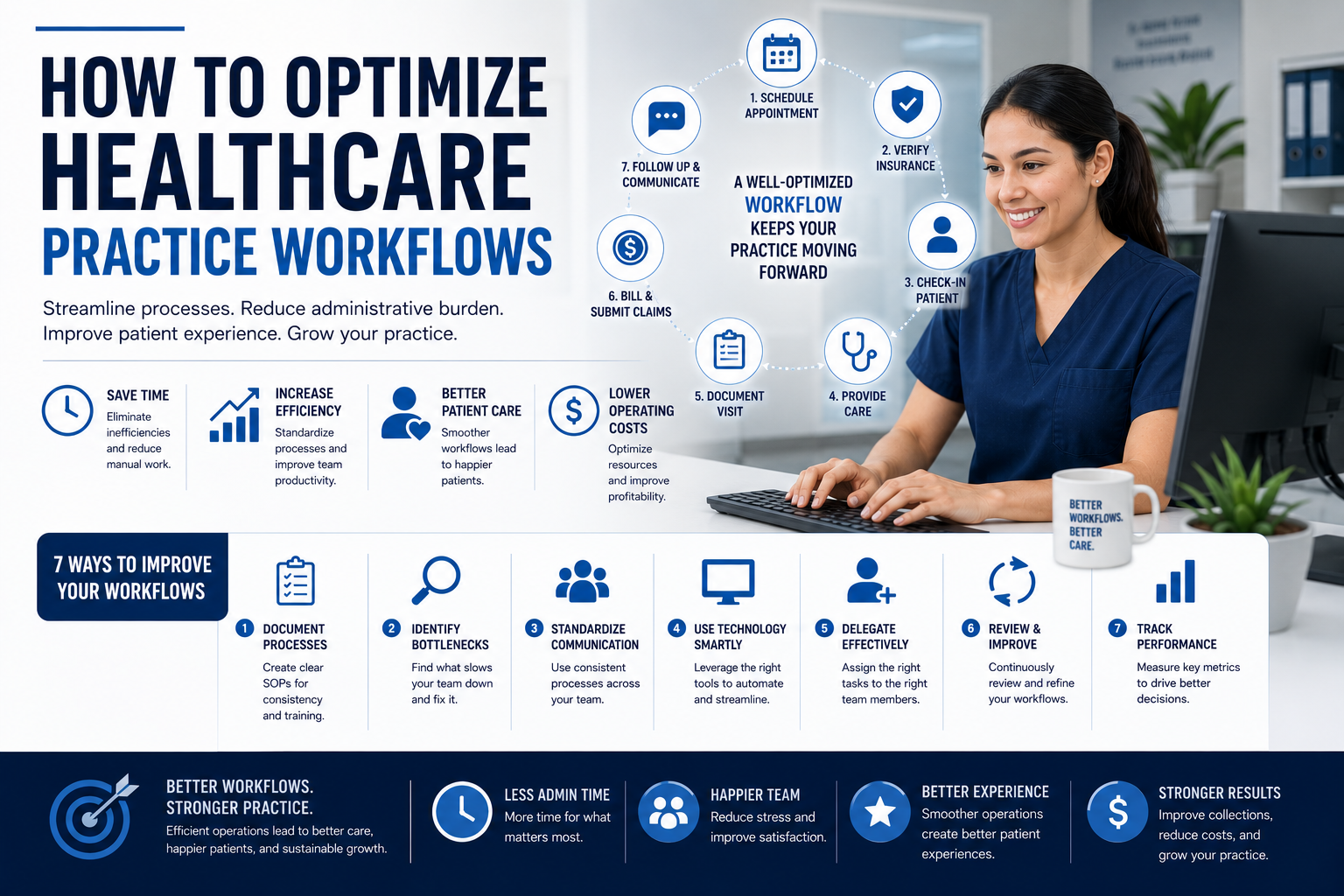
Every patient interaction involves multiple administrative steps.
For example:
When one step slows down, the rest of the workflow often follows.
Small inefficiencies repeated dozens of times each day can significantly impact productivity.
Many practices rely on employees remembering how tasks should be completed.
Instead, document your major workflows.
Examples include:
Written procedures improve consistency and simplify onboarding.
Look for tasks that repeatedly slow your team down.
Common examples include:
Identifying bottlenecks is the first step toward improving efficiency.
Strong communication keeps workflows moving.
Create consistent processes for communicating between:
Clear expectations reduce delays and minimize confusion.
Modern healthcare practices rely on technology to streamline operations.
Examples include:
Technology works best when it supports well-designed processes rather than replacing them.
Not every task requires the same employee.
Many practices improve efficiency by ensuring administrative work is handled by team members specifically assigned to those responsibilities.
Examples include:
Thoughtful delegation allows providers and front office staff to focus on higher-value activities.
Healthcare operations change over time.
Review your workflows periodically and ask:
Continuous improvement helps practices remain efficient as they grow.
Measuring key metrics helps identify opportunities for improvement.
Examples include:
Operational data provides valuable insight into workflow performance.
Many healthcare practices experience:
Improving workflows often helps address multiple challenges at once.
Workflow optimization is the process of improving how work moves throughout a healthcare practice by reducing unnecessary steps, improving efficiency, and creating more consistent operational processes.
Growth, changing technology, staffing changes, inconsistent procedures, and increasing administrative responsibilities can all contribute to workflow inefficiencies.
Many practices benefit from reviewing major workflows several times each year or whenever significant operational changes occur.
Yes.
Virtual healthcare assistants can support scheduling, patient communication, insurance verification, prior authorizations, documentation, medical billing support, referral coordination, and many other administrative workflows, allowing in-office teams to focus on patient-facing responsibilities.
Efficient workflows are one of the strongest competitive advantages a healthcare practice can build.
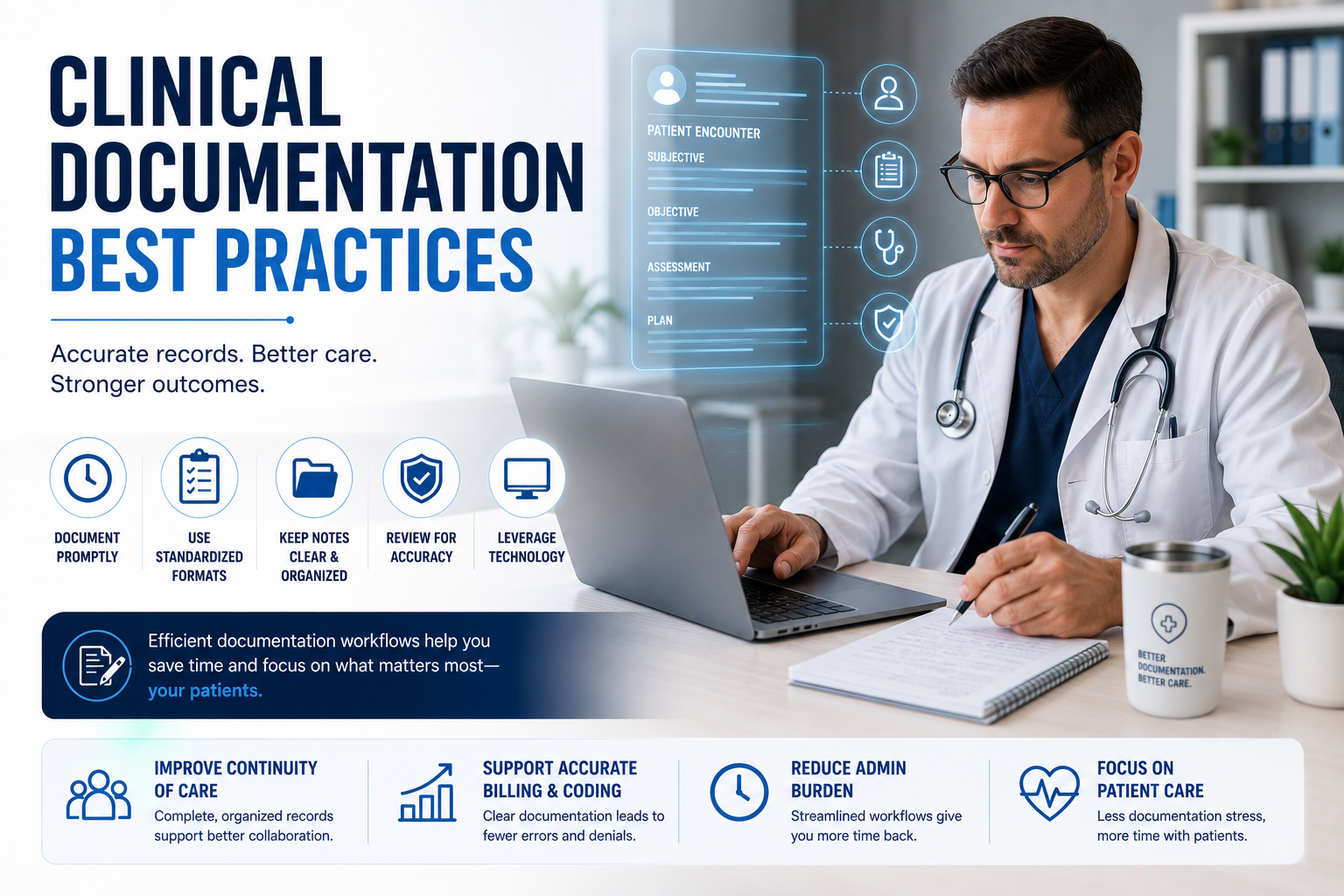
When administrative processes are organized, communication is consistent, and responsibilities are clearly defined, providers spend less time dealing with operational challenges and more time caring for patients.
Workflow optimization isn’t a one-time project.
It’s an ongoing commitment to building a practice that operates efficiently as it grows.
At Winning Assistants, we help healthcare practices build high-performing administrative teams by providing experienced virtual healthcare assistants who support scheduling, patient communication, insurance verification, prior authorizations, medical billing support, documentation, referral coordination, medical scribing, and many other non-clinical healthcare workflows.
If you’re looking to improve operational efficiency and reduce administrative burden, book a free consultation to learn how a virtual healthcare assistant can help streamline your practice.