August 7, 2026
Healthcare Staffing: The Complete Guide for Modern Medical Practices
.png)
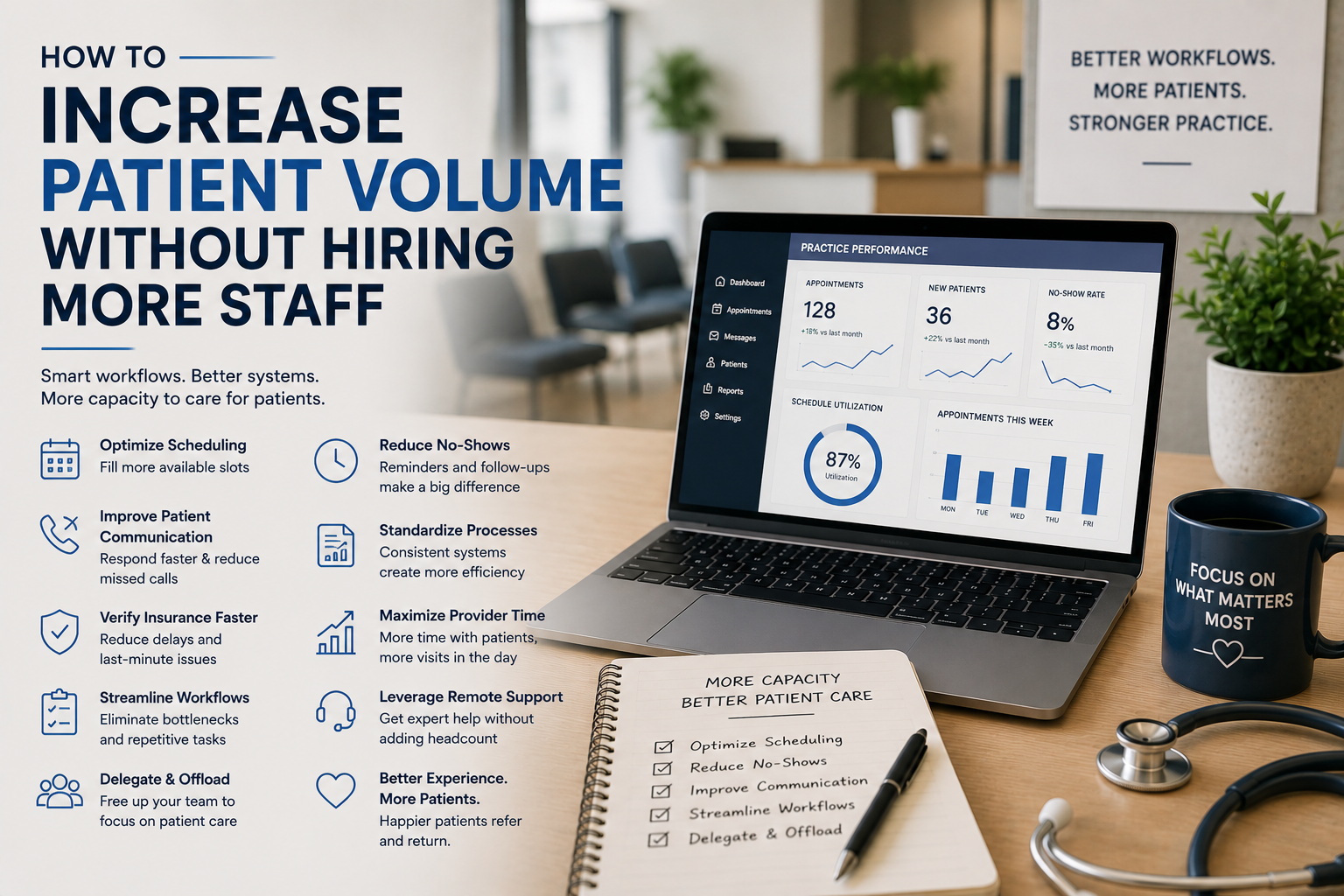
Growing a healthcare practice doesn’t always mean hiring more employees.
In many cases, the biggest obstacle to seeing more patients isn’t a shortage of providers—it’s inefficient administrative processes.
Scheduling delays, unanswered phone calls, insurance verification backlogs, and documentation bottlenecks can all reduce the number of patients a practice is able to serve.
Before adding more staff or expanding office space, it may be worth evaluating how efficiently your current operation is running.
Here are several practical ways healthcare practices can increase patient volume without immediately hiring additional in-house employees.
Healthcare practices can often increase patient volume by improving scheduling efficiency, reducing administrative bottlenecks, optimizing patient communication, streamlining documentation, and delegating non-clinical responsibilities so providers can spend more time caring for patients.
Every minute a provider spends on administrative work is a minute that cannot be spent with patients.
Many practices discover that physicians, nurse practitioners, and office managers spend significant portions of the day handling responsibilities that could potentially be delegated.
Examples include:
Reducing administrative workload allows providers to focus more of their time on patient care.
Even small scheduling improvements can create additional appointment availability throughout the week.
Consider evaluating:
A well-organized scheduling process can help reduce gaps throughout the day.
Missed appointments affect both patient access and practice productivity.
Many practices use automated reminders and proactive patient communication to help reduce no-shows.
Simple improvements to reminder systems and follow-up processes may increase the number of completed appointments over time.
Insurance verification delays can slow scheduling and create unnecessary administrative work.
Completing eligibility checks before appointments helps reduce interruptions on the day of service and allows front desk staff to focus on patients rather than resolving last-minute insurance issues.
Patients expect healthcare practices to answer calls promptly.
Long hold times, missed calls, or delayed callbacks may result in lost appointment opportunities.
Review your current process for:
Improving responsiveness helps create a better patient experience.
Many growing practices rely heavily on individual employees rather than documented processes.
Creating standard operating procedures for common administrative responsibilities helps improve consistency and allows work to be completed more efficiently.
Examples include:
Not every task requires a provider or senior staff member.
Many administrative responsibilities can often be delegated, including:
Delegating repetitive work allows experienced staff to focus on responsibilities that require their expertise.
Increasing patient volume is not always about working harder.
Sometimes it’s about allowing every team member to focus on the work they’re best equipped to perform.
For example:
Instead of having your front desk spend hours verifying insurance, they may be able to spend more time creating a welcoming patient experience.
Instead of providers answering administrative emails, they may be able to see additional patients.
Small workflow changes can have a meaningful impact.
Every practice develops bottlenecks over time.
Ask questions such as:
Regular operational reviews often reveal opportunities for improvement.
Many healthcare practices choose to expand administrative capacity without immediately increasing their in-office team.
Remote administrative professionals can often assist with responsibilities such as:
This approach may allow practices to increase operational capacity while maintaining flexibility.
Your practice may benefit from improving administrative workflows if:
Recognizing these signs early allows practices to address challenges before they begin affecting patient access.
In some cases, yes.
Improving administrative efficiency may allow providers to spend more of their day delivering patient care rather than managing operational responsibilities.
Optimized scheduling, reduced cancellations, and efficient calendar management may help practices make better use of existing appointment capacity.
Not necessarily.
Some practices first improve workflows, delegate administrative work, and optimize existing operations before deciding whether additional hiring is necessary.
Every practice is different, but administrative bottlenecks, scheduling inefficiencies, communication delays, and documentation demands are common operational challenges.
Increasing patient volume isn’t always about adding more people.
Often, it’s about creating more capacity within the team you already have.
By improving scheduling, reducing administrative bottlenecks, standardizing workflows, and ensuring providers spend more time with patients instead of paperwork, healthcare practices can often improve efficiency and better support future growth.
Operational improvements may seem small on their own, but together they can make a meaningful difference in your practice’s ability to serve more patients while maintaining a high standard of care.
If administrative work is limiting your practice’s growth, it may be time to explore additional support.
At Winning Assistants, we help healthcare practices delegate non-clinical administrative responsibilities to experienced medical virtual assistants, allowing providers and in-office teams to focus on delivering exceptional patient care.
Book a free consultation to learn how remote administrative support could help your practice operate more efficiently and create capacity for future growth.