August 7, 2026
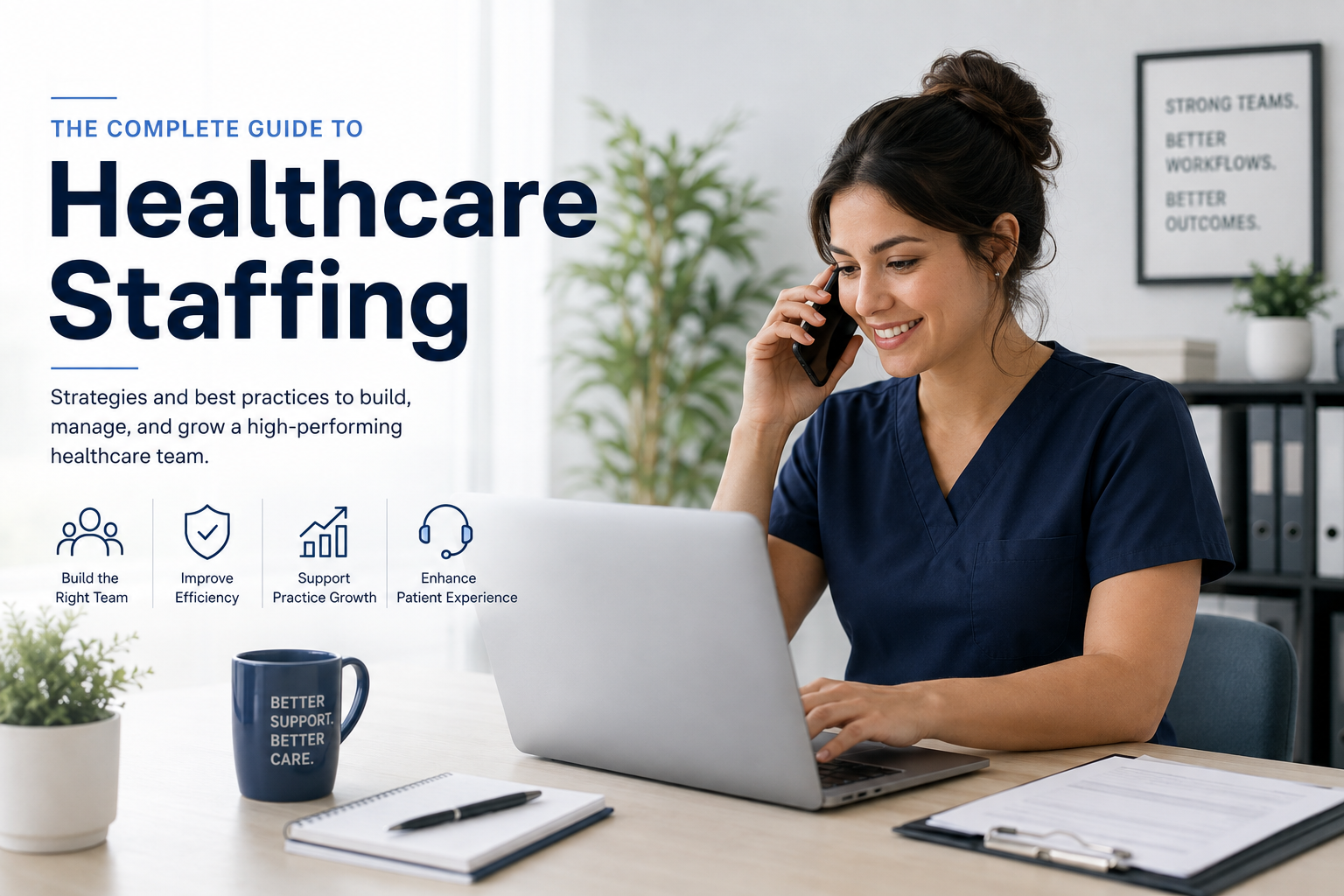
Healthcare Staffing: The Complete Guide for Modern Medical Practices
.png)

For many healthcare practices, the front desk is the heartbeat of daily operations.
It’s where patients check in, appointments are scheduled, phone calls are answered, insurance information is collected, referrals are coordinated, and countless administrative questions are resolved.
The problem is that every one of these responsibilities competes for the same person’s attention.
When interruptions become constant, bottlenecks develop.
Patients wait longer.
Phone calls go unanswered.
Insurance verification gets delayed.
Staff become overwhelmed.
The good news is that many of these challenges can be addressed by improving workflows—not simply by asking your front desk staff to work harder.
Healthcare practices can reduce front desk bottlenecks by identifying repetitive administrative tasks, improving scheduling processes, reducing interruptions, delegating appropriate responsibilities, and creating standardized workflows that allow front desk staff to focus on delivering an excellent patient experience.
Front desk teams are responsible for an incredible number of responsibilities throughout the day.
In many practices, one employee may simultaneously be expected to:
None of these tasks are difficult on their own.
The challenge is trying to perform all of them at the same time.
Start by asking your team one simple question:
“What interrupts your work most often?”
Common answers include:
Once you identify the biggest interruptions, you can begin designing better workflows around them.
One of the most effective ways to improve efficiency is separating responsibilities that require face-to-face interaction from those that can be completed behind the scenes.
For example, your front desk team may focus on:
Meanwhile, other administrative responsibilities such as insurance verification, appointment confirmations, referral coordination, documentation support, and patient follow-up may be handled separately.
Reducing constant task switching helps improve both efficiency and the patient experience.
Phone calls are one of the largest sources of front desk interruptions.
Consider reviewing:
Small improvements to call management can reduce disruptions throughout the day.
Insurance issues are much easier to resolve before patients arrive.
Completing eligibility checks in advance helps prevent delays during check-in while giving your front desk staff more time to focus on patients instead of troubleshooting insurance coverage.
Every patient should experience a consistent check-in process.
Create documented procedures for:
Standardization reduces confusion and makes onboarding new employees much easier.
Multitasking often feels productive, but constant switching between responsibilities can actually slow your team down.
Instead of asking one employee to manage every administrative task simultaneously, look for opportunities to group similar work together.
Examples include:
This allows employees to complete work more efficiently with fewer interruptions.
Not every task needs to happen at the front desk.
Many practices choose to delegate administrative responsibilities such as:
This creates additional capacity for front desk staff to focus on the patients standing in front of them.
As practices grow, workflows naturally change.
Schedule regular operational reviews and ask questions like:
Continuous improvement helps prevent small inefficiencies from becoming larger operational problems.
You may have a front desk bottleneck if you notice:
Recognizing these signs early allows practices to make operational improvements before patient satisfaction is affected.
For many practices, it’s constant interruptions. Phone calls, walk-in patients, scheduling requests, insurance questions, and provider communication all compete for attention throughout the day.
Not necessarily. Many administrative responsibilities can often be handled separately, allowing front desk staff to focus on patient-facing interactions.
Yes. Faster check-in, improved communication, shorter wait times, and more organized administrative processes often contribute to a smoother patient experience.
Many organizations benefit from reviewing workflows regularly, particularly during periods of growth or after introducing new services, providers, or technology.
Your front desk sets the tone for every patient visit.
When administrative responsibilities become overwhelming, both patients and staff feel the impact.
Improving workflows, reducing unnecessary interruptions, standardizing procedures, and thoughtfully delegating administrative work can help create a calmer, more organized front office that supports both your team and your patients.
Operational efficiency isn’t about asking employees to work faster.
It’s about building systems that allow them to do their best work.
If your front desk is overwhelmed by scheduling, insurance verification, patient communication, and other administrative responsibilities, it may be time to rethink how work is distributed across your team.
At Winning Assistants, we help healthcare practices build dedicated administrative support teams that allow front desk staff to focus on delivering an exceptional patient experience while remote professionals handle many of the behind-the-scenes administrative workflows.
Book a free consultation to learn how your practice can reduce bottlenecks, improve efficiency, and create more capacity for growth.